
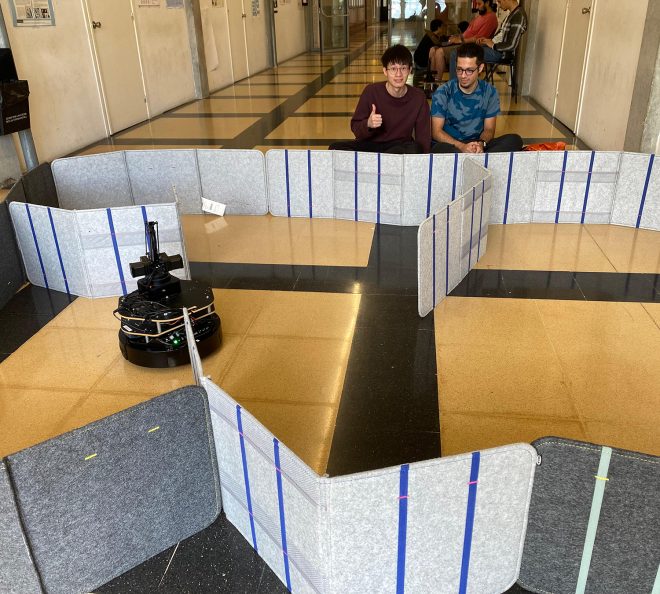
It is late May at the Universitat de Girona (UdG), and the whiteboards covered in mathematical proofs have finally given way to the hum of motors and the glow of terminal screens. For the 2025–2027 cohort of the IFRoS Master’s program, the theoretical foundations laid during the first semester are now colliding with the complex, unpredictable reality of physical hardware. Over the past seven weeks, students have been immersed in the laboratories, tasked with a monumental challenge: transforming abstract algorithms into fully autonomous, intelligent mobile manipulators. This isn't just about writing code; it is about engineering a system that can wake up in an unknown environment, understand its surroundings, make real-time decisions, and physically alter its world.
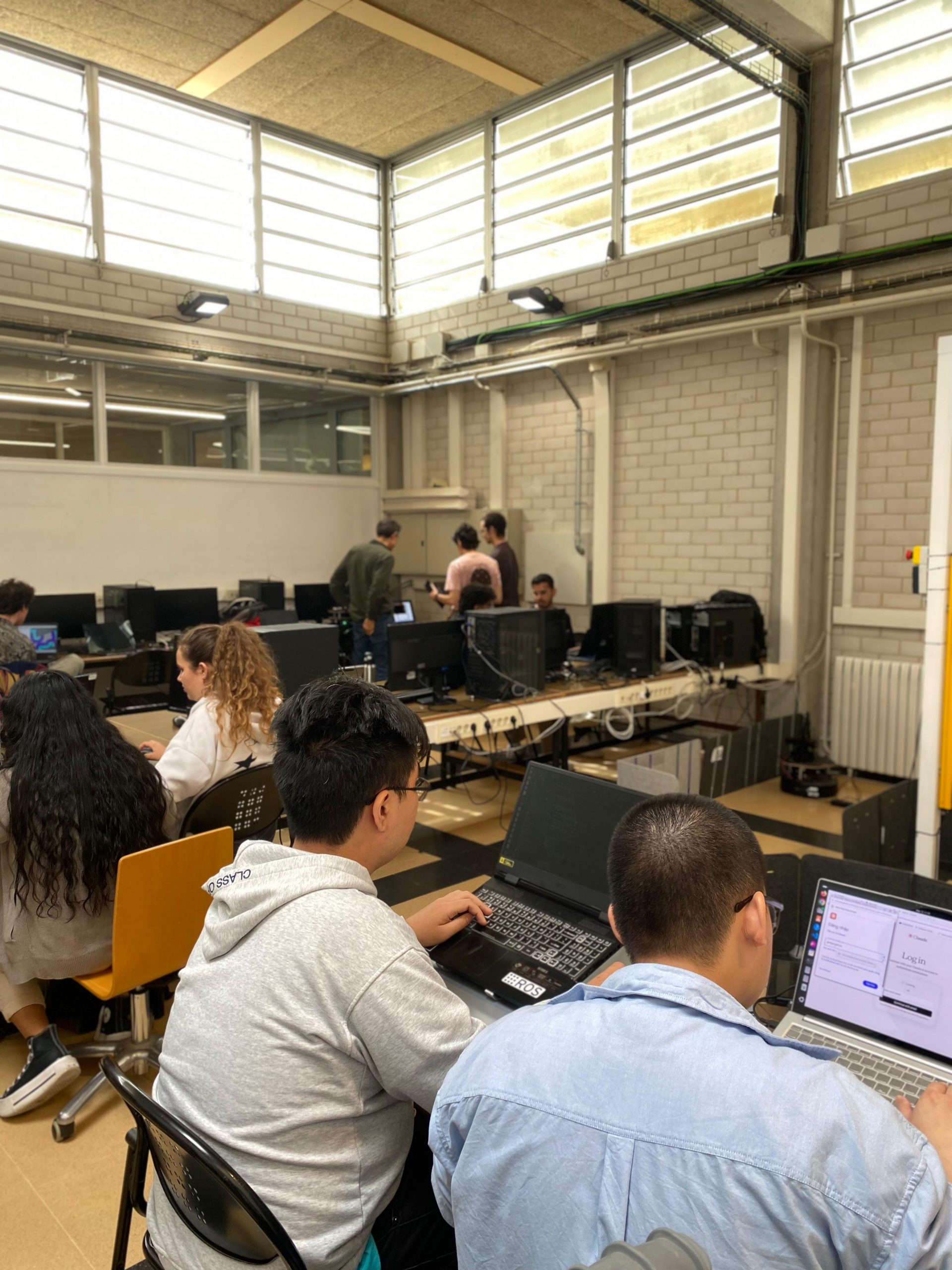
The journey of autonomy begins with awareness. Before a robot can act, it must be able to answer the fundamental question of where it is. To solve this, student teams are building sophisticated Localization engines from the ground up, moving far beyond standard plug-and-play solutions. By fusing raw odometry and compass data with advanced observation models—such as Normal Distribution Transform (NDT) registration and Laser Range Finder metrics—the robots learn to orient themselves in space. Some teams are deploying Extended Kalman Filters (EKF) utilizing Lie Groups to handle the manifold-based estimation, while others are optimizing complex spatial graphs using the GTSAM library.
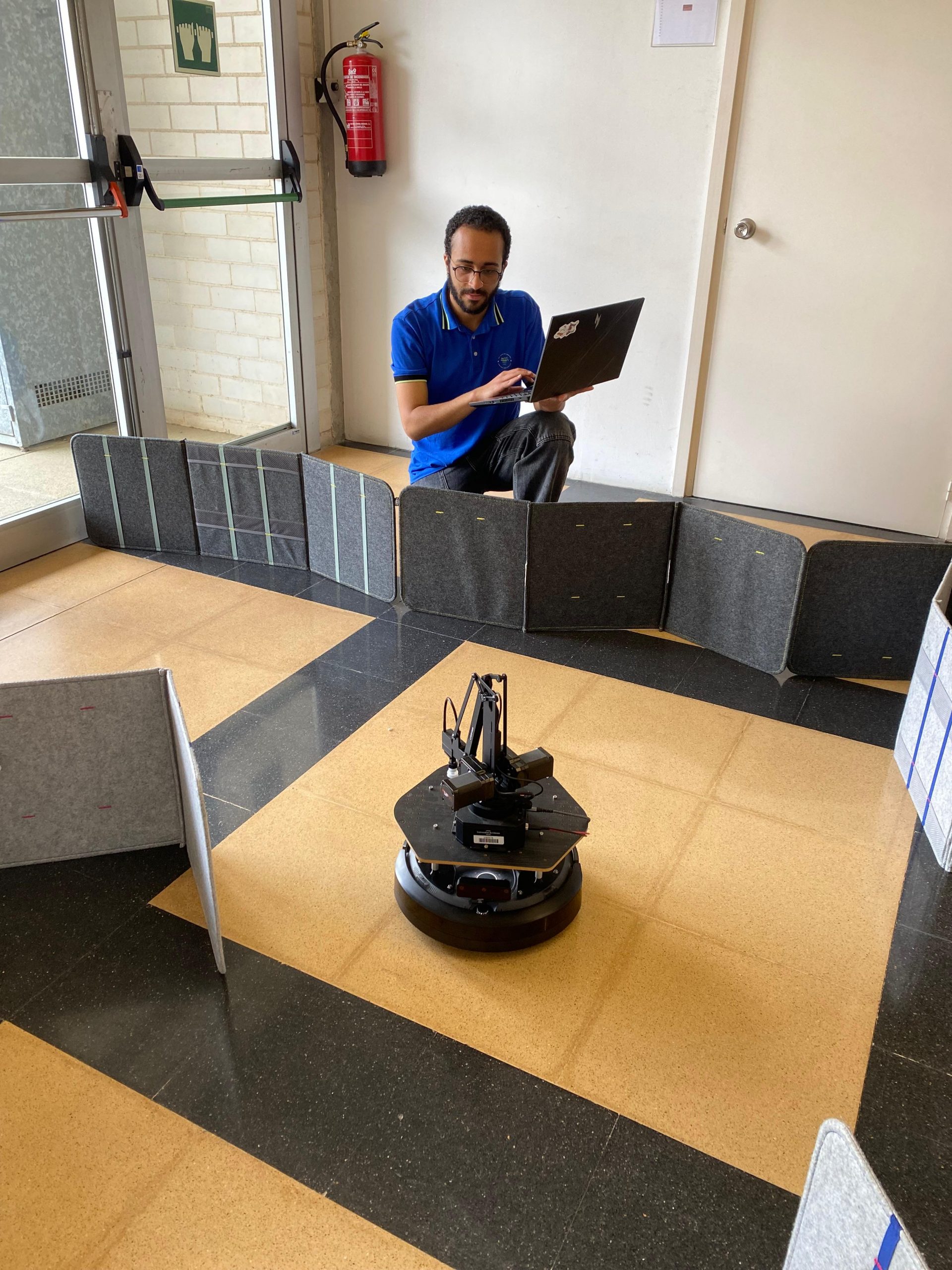
But knowing their location is only the first step; they must also see. Through integrated Perception modules, these machines are taught to process RGB-D camera feeds to identify specific targets, like ArUco markers or everyday objects, estimating their exact 3D coordinates in a crowded room.
Once the robot understands its environment, it requires the intelligence to navigate it. This is where the Planning phase comes in, transforming sensory data into fluid, purposeful movement. The challenges the students are tackling here are incredibly diverse. Several groups are focused on kinodynamic planning, ensuring that the robot's generated paths respect the physical and dynamic constraints of the vehicle to prevent jerky, stop-and-go motions. Other teams are implementing global-local architectures, utilizing algorithms like RRT* to plot a broader geometric route while a local planner, such as a Dynamic Window Approach (DWA), handles real-time, reactive obstacle avoidance. Whether they are commanding the robot to systematically cover a surface area or visually inspect a labyrinth of walls, the goal is to create a seamless, calculating navigator.
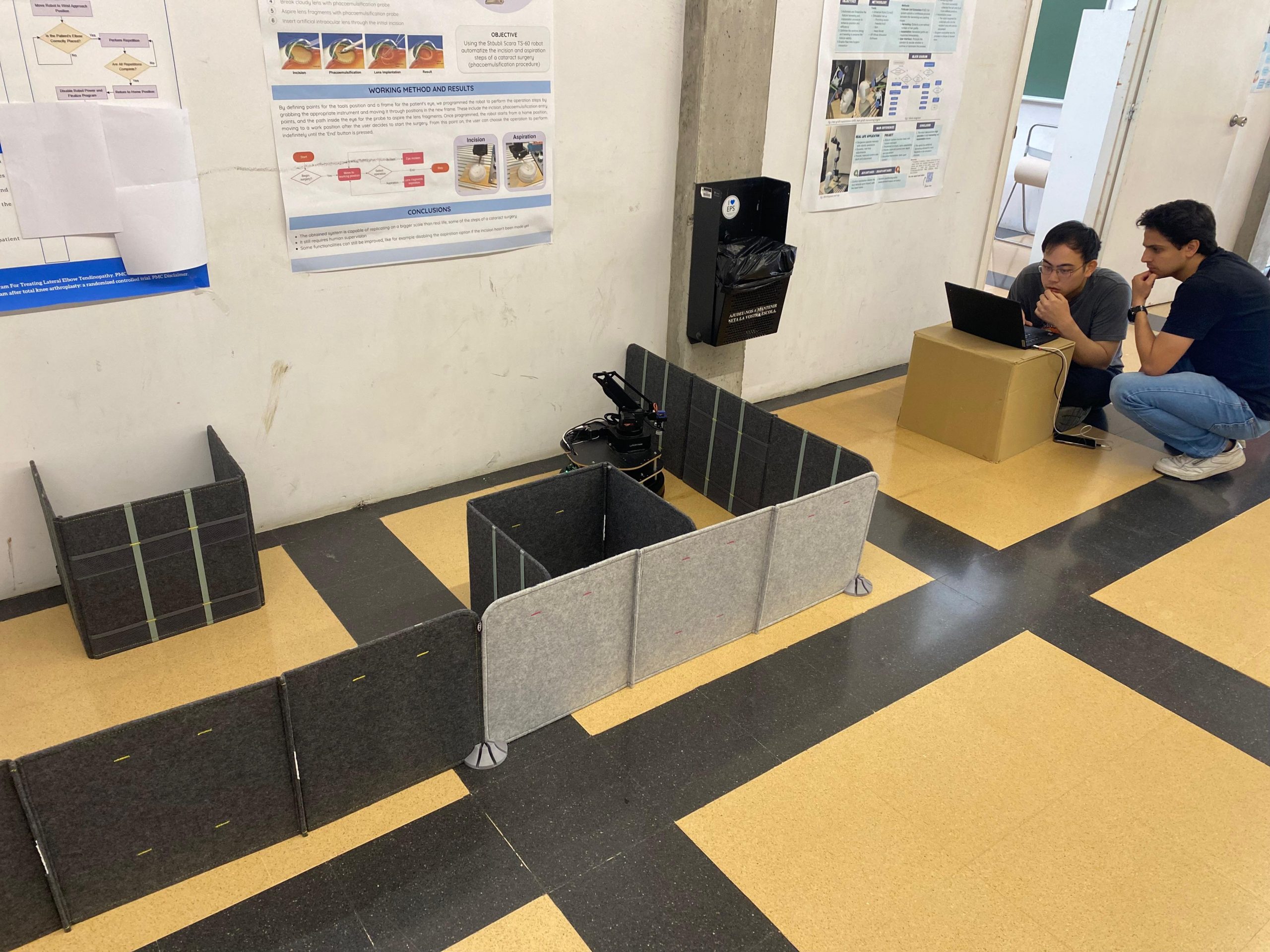
Navigation, however, is only half the battle; true autonomy requires physical interaction. In the Intervention phase, the robots evolve from passive observers into active participants. Outfitted with a 4-degree-of-freedom robotic arm and a vacuum gripper, the TurtleBot 4 base becomes a fully capable mobile manipulator. Controlling a moving chassis while simultaneously operating an arm introduces immense mathematical complexity. To solve this, students are implementing Task-Priority redundancy resolution algorithms. This allows the system’s "brain" to seamlessly approach a target, calculate the inverse kinematics on the fly, and extend its uArm Swift Pro to grasp and transport an object—all while strictly adhering to joint limits and preventing self-collision.
What makes this seven-week sprint so rigorous is the methodology behind the madness. The students do not simply guess and test on fragile hardware. Every line of code is born from symbolic derivations and conceptual block diagrams before being rigorously tested in the Stonefish simulator—a high-fidelity virtual environment that perfectly mimics the physical dynamics of the UdG labs. Only when this virtual prototyping is flawless is the architecture transferred to the real hardware. It is in this hardware-in-the-loop transition that the true engineering lessons are learned, as students tune velocity limits and control gains to bridge the gap between perfect simulation and imperfect reality.
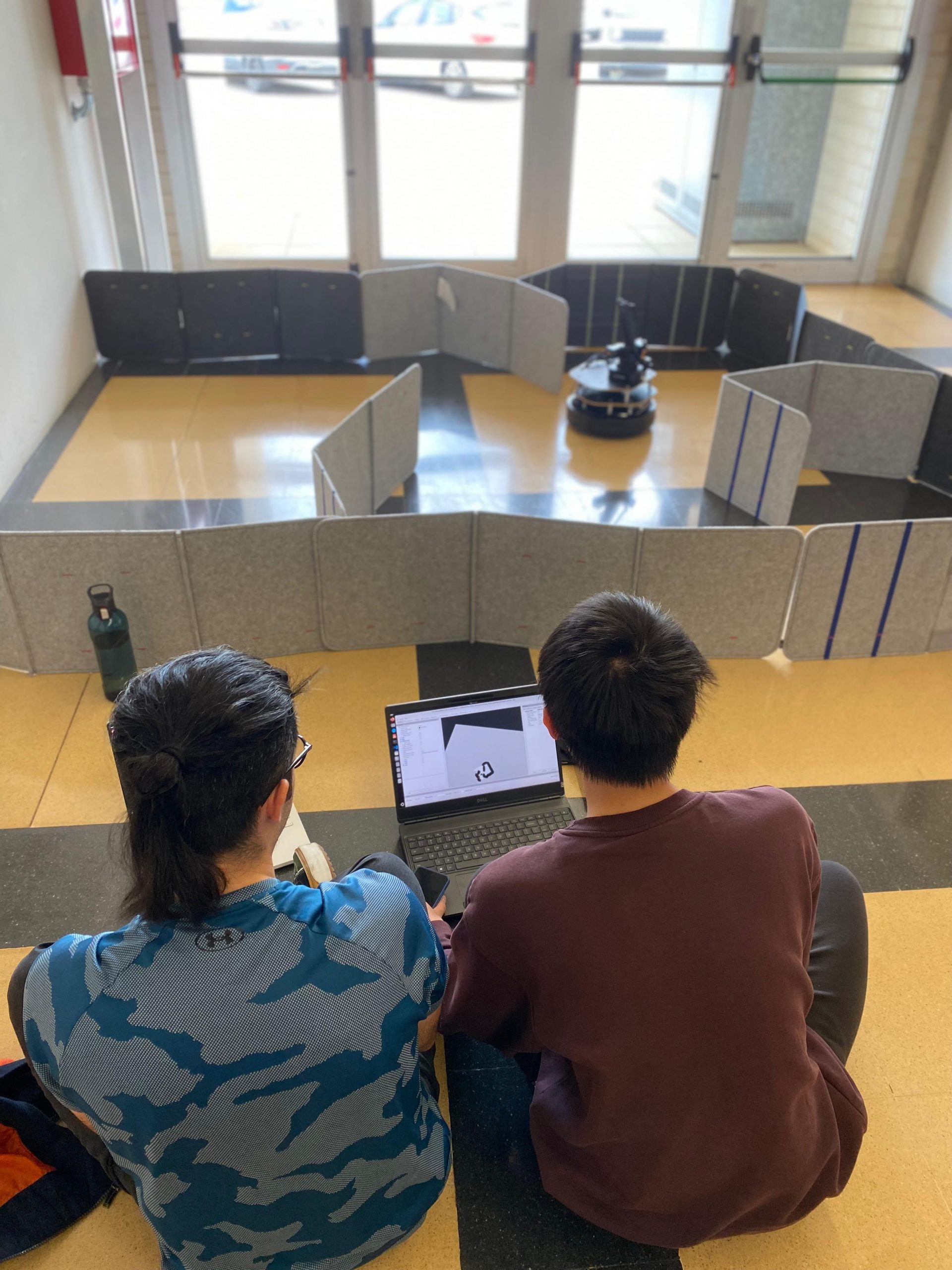
Now, as the final week of lab work approaches, the tension and excitement are palpable. These isolated modules—localization, perception, planning, and intervention—are currently being integrated into single, unified robotic minds. The true test of this year-long journey will culminate in the final days of May. On May 26th, the students will present the hard science and methodology behind their architectures, followed by the highly anticipated Demo Day on May 28th, where these autonomous systems will face the ultimate test on the lab floor. It is the thrilling conclusion to their first year, and a definitive step toward the future of field robotics.